Group 03 - MONITORIZAÇÃO AMBIENTAL
![[Vídeo do projeto]](/projects/group03/thumbnail.jpg)
| Team: |
Group 03: João Gabriel Pina Batista (Coord.) , Vasco Tiago Chan Pestana , Nuno Tomás Santos Silva Madeira Gomes , Hugo Miguel Moreira Afonso , Tiago Costa Fonseca , Pedro Oliveira de Sousa |
| Company: | Ubiwhere |
| Supervisors: |
Óscar Pereira (DETI)
Bruno Feitais (Ubiwhere) |
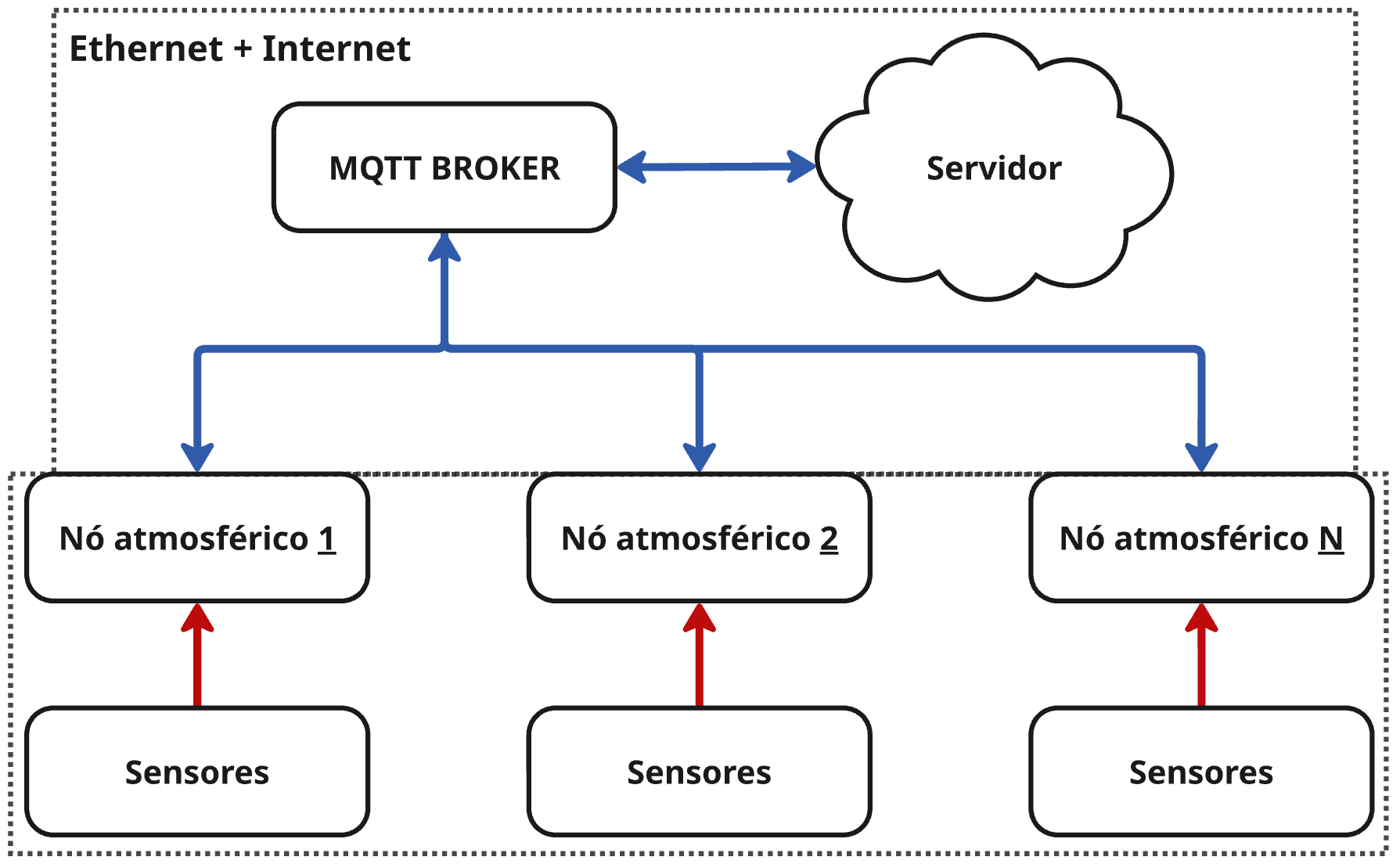
Developed in collaboration with UbiWhere, this project aims to create an affordable and efficient environmental monitoring system using low-cost sensors and the ESP32 platform. The goal is to collect real-time data—such as temperature, humidity, air quality (CO₂ and carbon monoxide), luminosity, noise, and weather conditions—and transmit it via MQTT protocol to a central database.The solution stands out for its scalability and adaptability, enabling seamless integration into Smart City infrastructures and easy expansion with new sensors as urban needs evolve. Additionally, the system is designed to be resistant to harsh weather conditions, ensuring reliable performance with proper component protection. By providing accurate and up-to-date information, this project supports smarter urban management, fostering sustainability, pollution reduction, and resource optimization. Its implementation helps create more connected, efficient, and eco-friendly cities, aligning with the challenges of sustainable urban development. In summary, this is an innovative and cost-effective tool that transforms environmental data into actionable insights, enhancing quality of life in cities.
Challenge
The project aimed to develop a low-cost, scalable, and easily integrable environmental monitoring system for Smart Cities. The core challenge was to create a proof-of-concept IoT device capable of collecting real-time data on key environmental parameters—such as temperature, humidity, air quality (CO₂ and carbon monoxide), luminosity, noise, and weather conditions—and transmitting this data efficiently to UbiWhere’s central database via MQTT protocol.
Initial Specifications and Requirements
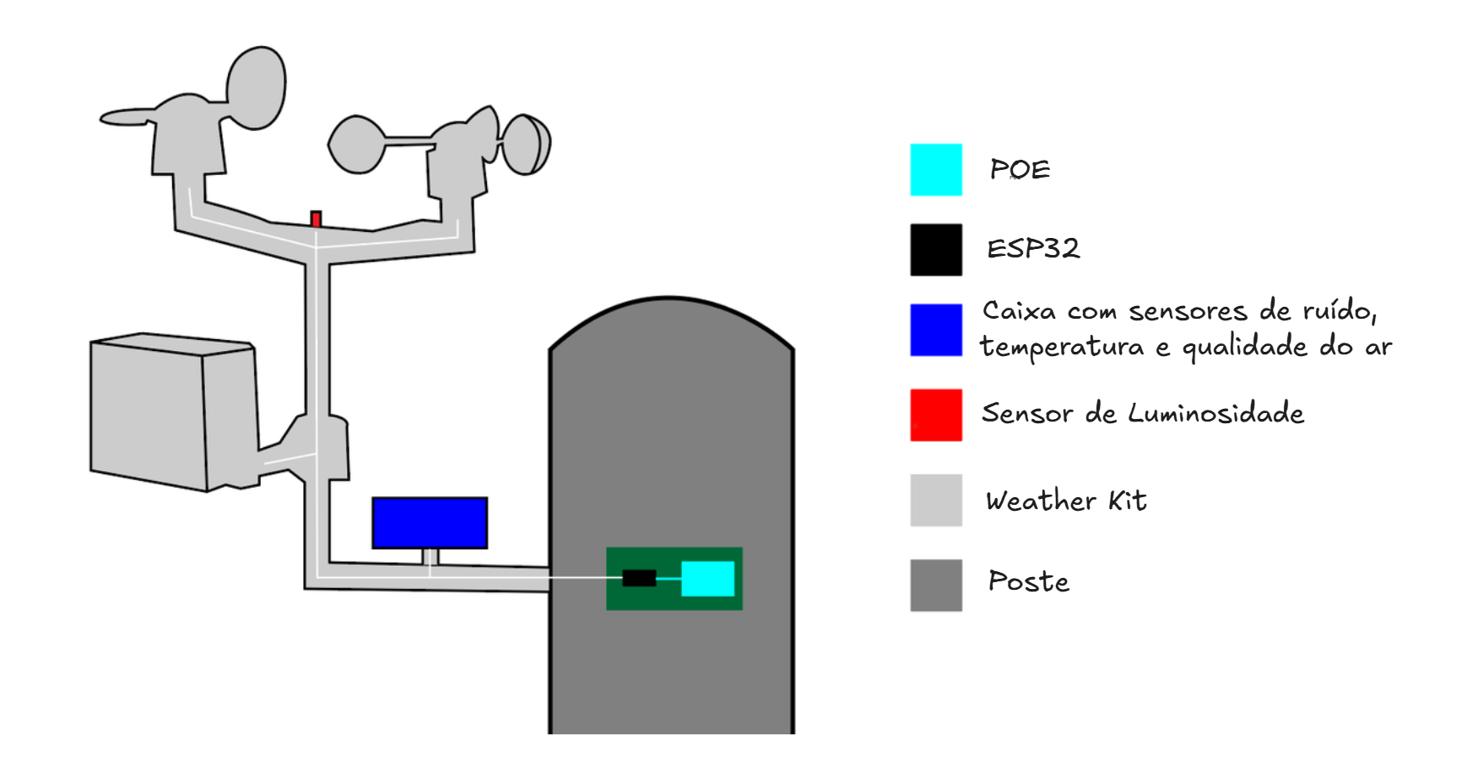
-Low-cost sensors without compromising accuracy or reliability. -ESP32-based platform for processing and communication, ensuring energy efficiency and scalability. -MQTT integration for seamless data transmission to UbiWhere’s infrastructure. -Resilience to outdoor conditions, including protection against rain, dust, and temperature fluctuations. -Modular design to allow future expansion with additional sensors or functionalities. -Compatibility with existing Smart City infrastructure, ensuring easy deployment and minimal maintenance.
Results
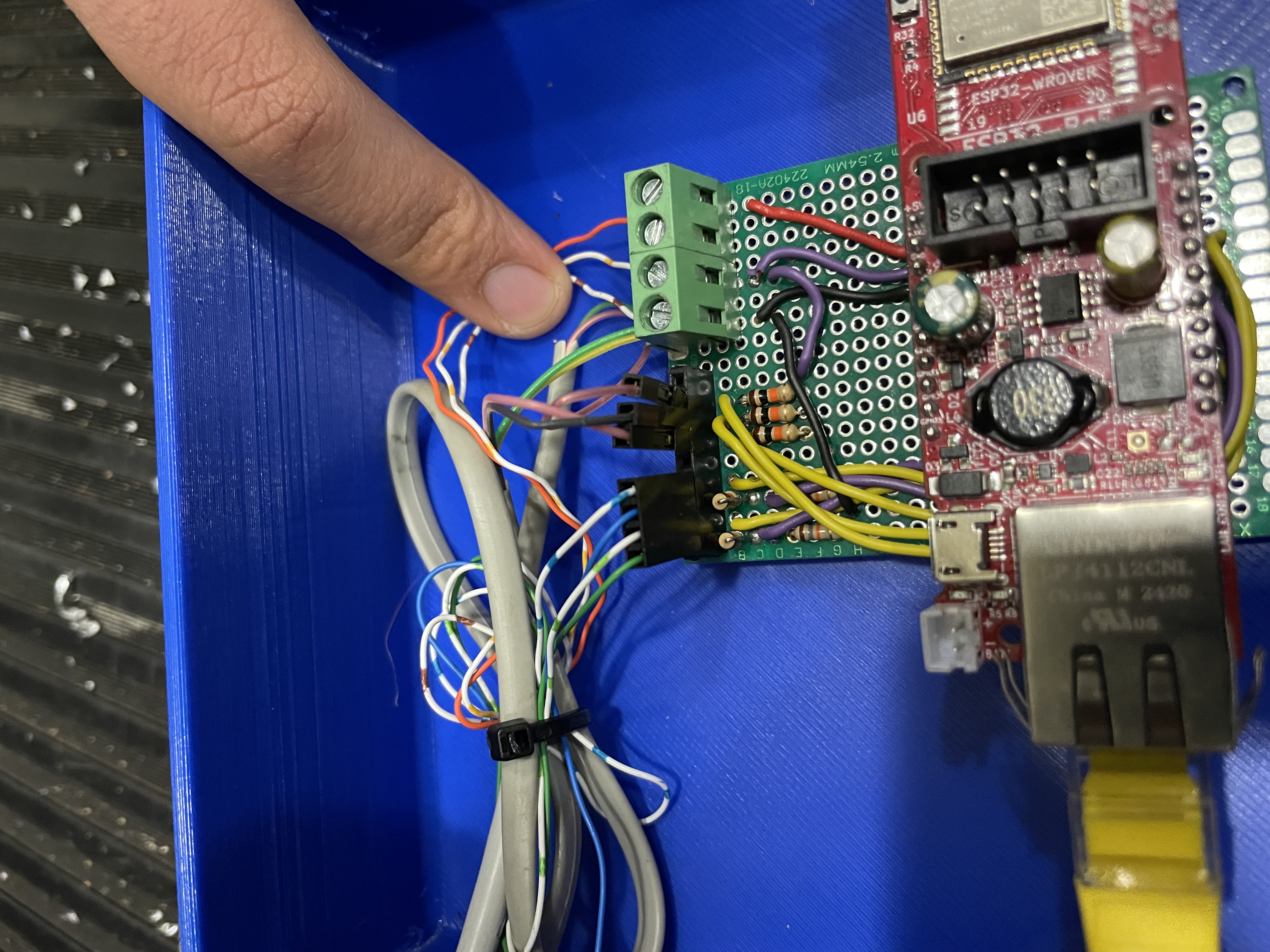
The project successfully delivered a fully functional prototype of an environmental monitoring system, built using low-cost sensors and an ESP32 platform. The team assembled a robust hardware setup, including a 3D-printed protective enclosure and a perforated board for secure, weather-resistant sensor integration. This design ensures durability in outdoor conditions while maintaining easy access for maintenance or upgrades. A key achievement was the seamless integration with UbiWhere’s database via the MQTT protocol. Data from sensors—such as temperature, humidity, CO₂ levels, and luminosity—is transmitted in real time using a JSON format, ensuring compatibility with the company’s existing infrastructure. Despite initial challenges with Ethernet connectivity, the system reliably operates over Wi-Fi, meeting all communication requirements. The prototype’s modular design allows for straightforward addition or removal of sensors, making it highly adaptable to different urban monitoring needs. Sensor data proved to be accurate and stable, with successful calibration—particularly for gas sensors—ensuring consistent, high-quality readings. This flexibility and reliability make the system a practical solution for scalable Smart City applications.
More information
Technical Details and Development Process
ESP32 Platform: Selected for its low power consumption, processing capability, and Wi-Fi/POE support. Sensor Calibration:
CO₂ and CO sensors required prolonged testing (up to 48 hours) to stabilize readings. Noise sensor limitations identified; future iterations may include a microphone array for improved accuracy.
Communication Challenges:
Ethernet compatibility issues resolved by reverting to Wi-Fi, with documentation provided for future Ethernet integration. MQTT optimization ensured reliable data transmission even in variable network conditions.
Visuals and Prototyping