
Group 06 – Low-Cost LED Analyzer for Network Devices
![[Vídeo do projeto]](/projects/group06/led_logo.png)
| Team: |
Group 06: Jorge Neto (Coord.) , Celina Brito , Guilherme Santos , Martim Gil , Patricia Moltchanova |
| Company: | Altice LAbs |
| Supervisors: |
Francisco Fontes (DETI – University of Aveiro and Altice Labs)
Nuno Balseiro (Altice Labs) Helder Alves (Altice Labs) |
This project presents the development of a low-cost LED analyzer designed for routers and gateways. The system enables objective measurement of LED color, luminous intensity, and estimated wavelength using accessible hardware and modular software. By combining optical isolation, color sensors, and automated data processing, the prototype offers a reliable and cost-effective alternative to traditional industrial validation equipment.
- Introduction and Motivation
- Project Objectives
- System Architecture
- Hardware and 3D Printing
- Software Architecture
- Results
- Conclusion and Future Work
Introduction and Motivation
In the daily basis , light emitting diodes (LEDs) are widely used as visual indicators in modern network devices such as routers and gateways. These LEDs convey critical information regarding device status, connectivity, and operational conditions. In industrial environments, particularly during production and quality control stages, ensuring the correct colour, luminous intensity, and wavelength of these LEDs is essential to guarantee product consistency with design specifications.
Currently, LED validation is often performed manually through visual inspection, a process that is subjective, time-consuming, and prone to human error. Commercial optical analysis equipment exists, but it is typically expensive, bulky, and unsuitable for rapid integration into production lines or academic environments. This gap motivated the development of a low-cost, compact, and objective LED analysis system capable of automating this validation process.
Project Objectives
The main objective of this project was to design and implement a low-cost LED analyzer capable of objectively measuring:
-
Colour composition (RGB values),
-
Luminous intensity,
-
Estimated dominant wavelength.
The system is intended to analyze LEDs used in network devices, particularly routers and gateways, while remaining affordable, modular, and easily extensible. Additional objectives included:
-
Reducing subjectivity in LED validation,
-
Improving repeatability and measurement consistency,
-
Enabling data logging for future analysis,
-
Supporting both academic and industrial use cases.
System Architecture
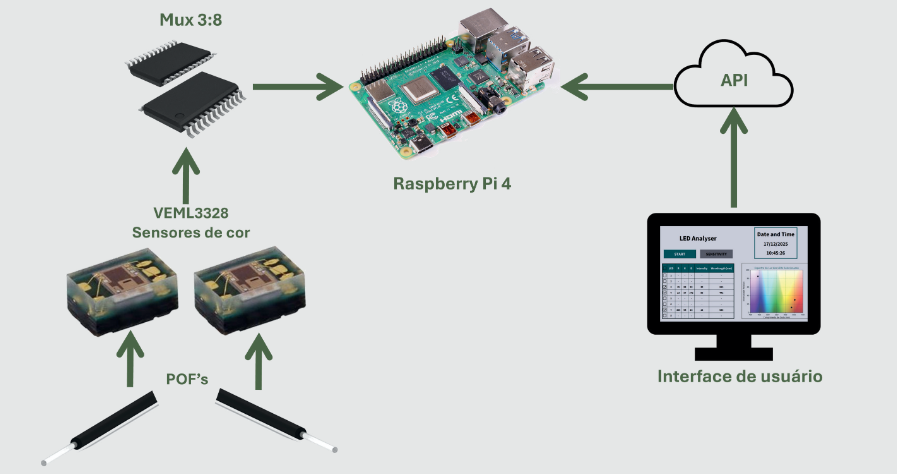
The system architecture integrates both hardware and software components in a modular and scalable design. At the hardware level, color sensors are used to acquire RGB and clear channel data from LEDs. Plastic Optical Fibers (POFs) are employed to guide light from the LED under test to the sensor, ensuring optical isolation and minimizing ambient light interference. A 3-to-8 I²C multiplexer allows the selection of multiple sensors using a single communication bus.
A Raspberry Pi 4 serves as the main processing unit, handling sensor communication, data acquisition, and processing. At the software level, a modular driver architecture is implemented in C, complemented by a REST API that enables interaction with external clients and future user interfaces.
Hardware and 3D Printing
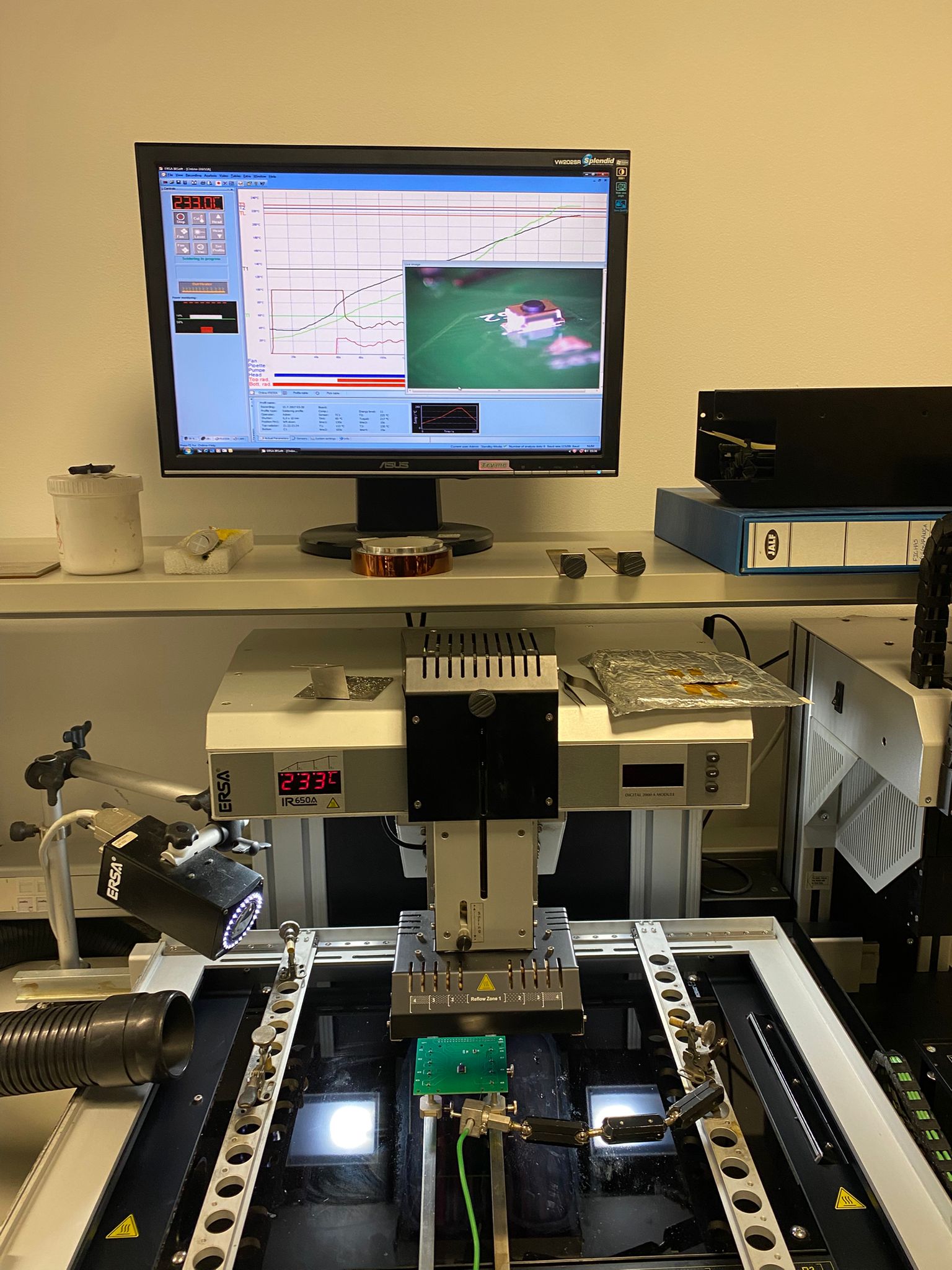
In an initial phase, the project required the development of a complete electronic schematic, careful component selection, and iterative testing to validate the correct operation of the printed circuit board (PCB). Emphasis was placed on reliability, signal integrity, and compatibility with the Raspberry Pi platform.
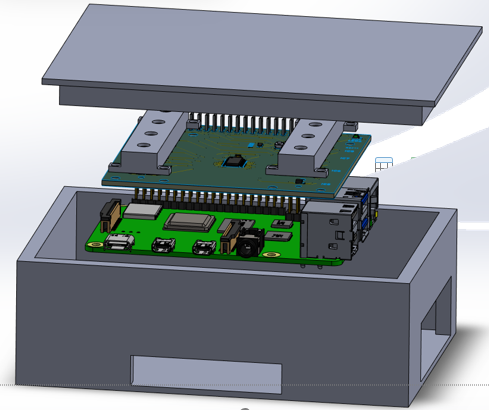
A custom mechanical structure was developed using 3D printing techniques to ensure precise alignment between the Plastic Optical Fibers and the color sensors mounted on the PCB. This structure plays a critical role in guaranteeing repeatable and accurate measurements by maintaining consistent optical coupling and shielding the sensors from external light sources.
The final prototype integrates the PCB, optical fibers, and mechanical enclosure into a compact and robust system, suitable for laboratory and industrial testing scenarios.
Software Architecture
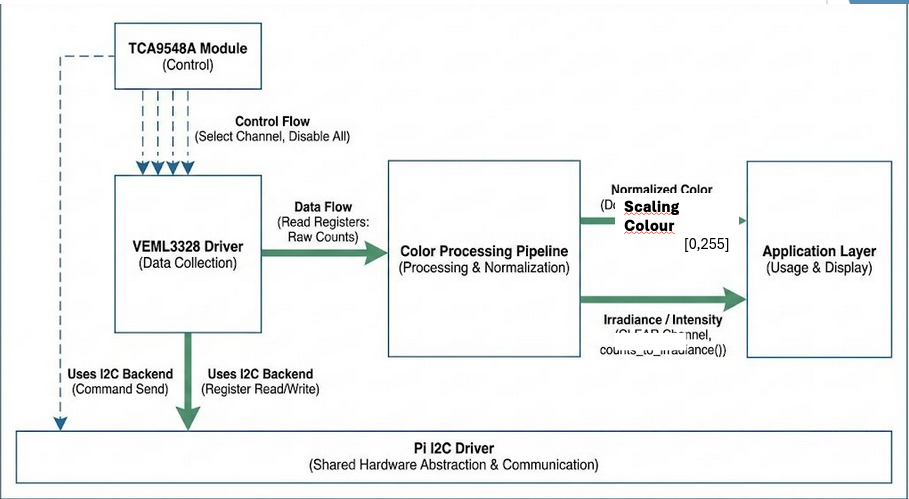
The software architecture follows a layered and modular approach. Low-level drivers handle I²C communication with the color sensors and the multiplexer, while higher-level modules manage sensor configuration, data acquisition, normalization, and wavelength estimation.
Unit tests were implemented using a mock I²C backend to validate driver logic independently of hardware availability. Integration tests were subsequently performed on the Raspberry Pi using the real PCB and sensors, ensuring correct end-to-end operation. This approach improves reliability and facilitates future extensions of the system.
Results
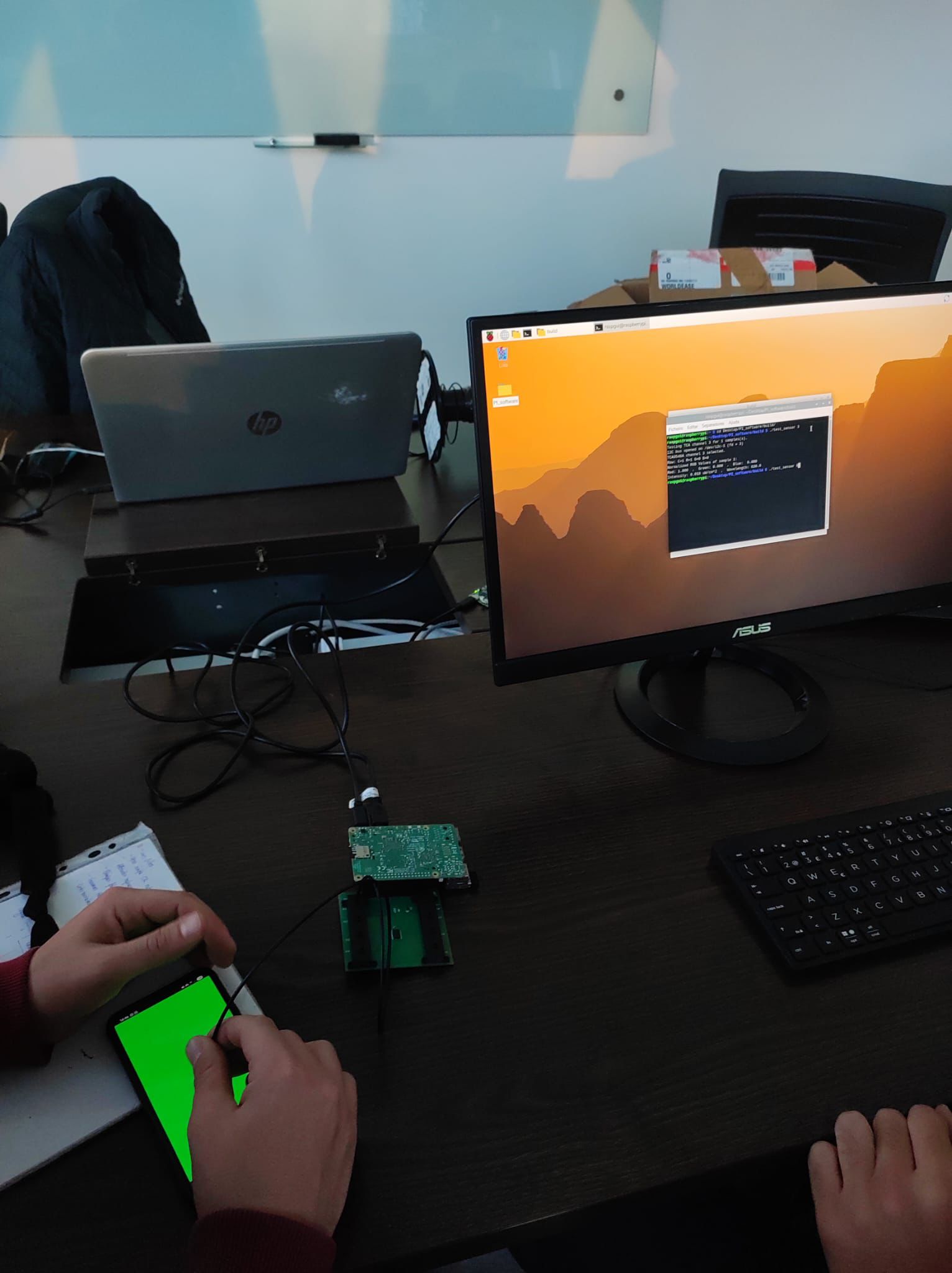
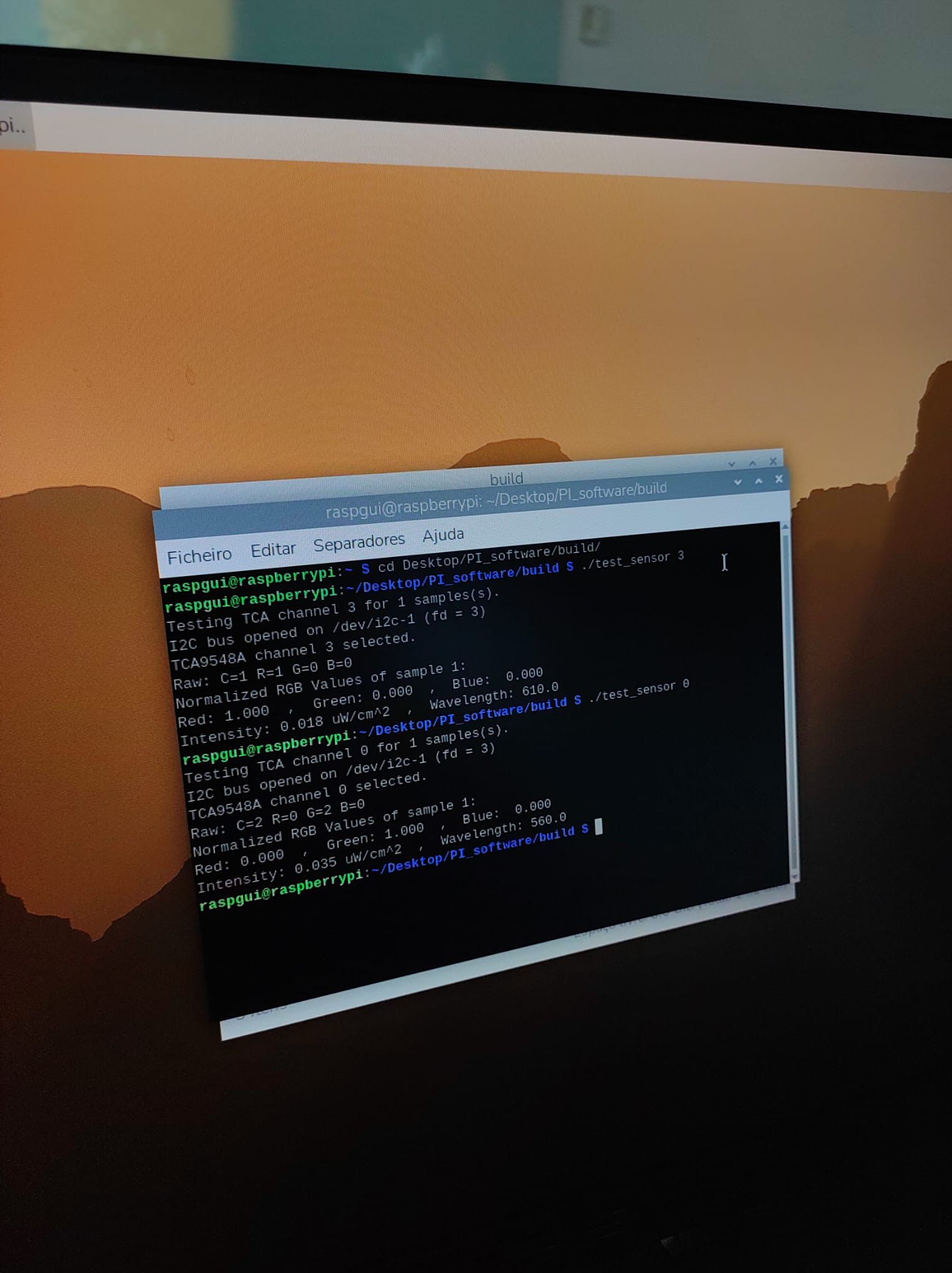
The developed prototype successfully fulfills the proposed objectives, providing objective measurements of LED color components, luminous intensity, and estimated wavelength. Experimental results demonstrate consistent sensor readings across multiple channels and confirm the effectiveness of optical isolation using POFs.For the more trustworthy results we used a router with RGB leds instead of testing using our mobile phones that added noise to our results in preliminary tests
The solution proves to be a functional and economical alternative to commercial LED analysis equipment. The use of accessible hardware and modular software makes the system particularly attractive for academic use, rapid prototyping, and small-scale industrial validation.
Conclusion and Future Work
This project demonstrates the feasibility of a low-cost LED analyzer capable of delivering reliable and objective measurements for network device validation. The integration of hardware design, optical isolation, embedded software, and testing methodologies results in a robust and extensible platform.
Future work includes absolute calibration using photometric references, development of a graphical user interface, integration with a database for historical data logging, and expansion toward more detailed spectral analysis capabilities.