Group 09 - Project name
![[Vídeo do projeto]](/projects/group09/thumbnail.jpg)
| Team: |
Group 09: Joana Duarte (Coord.) , Guilherme Guarino , Henrique Ferreira , Nuno Magalhães , Ricardo Nunes |
| Company: | PICadvanced |
| Supervisors: |
Pedro Fonseca (DETI)
Ricardo Ferreira (PicAdvanced) |
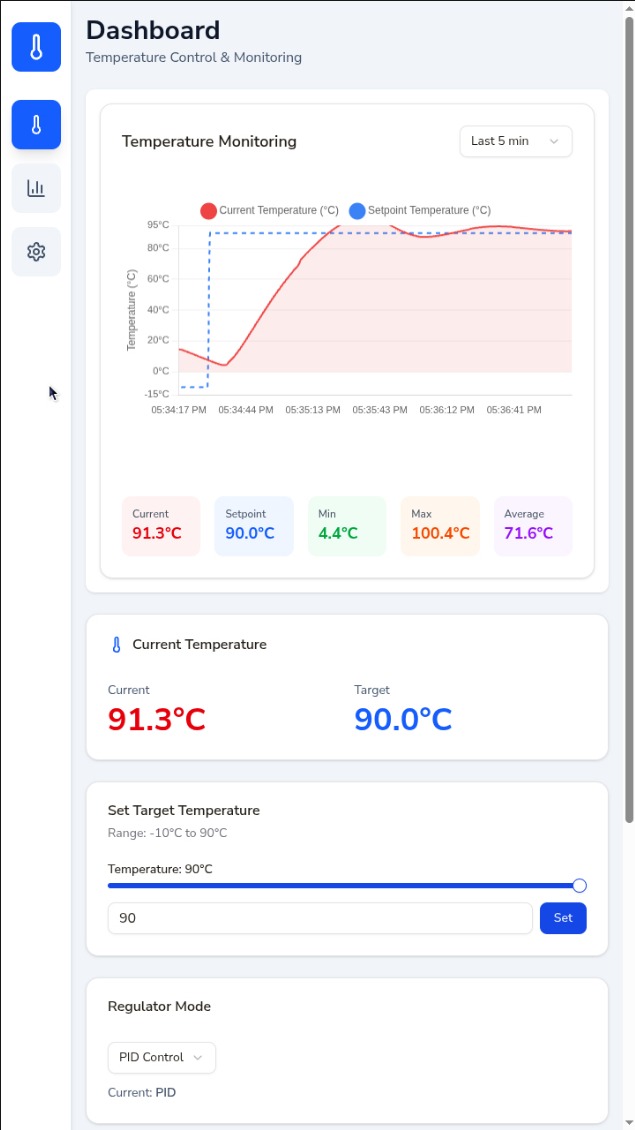
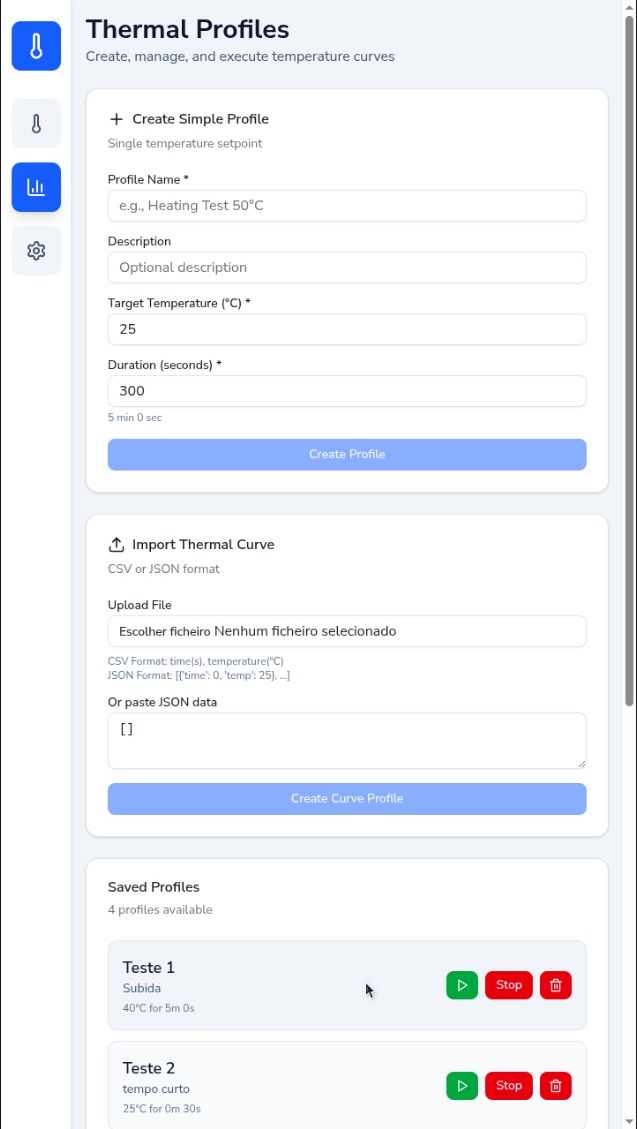
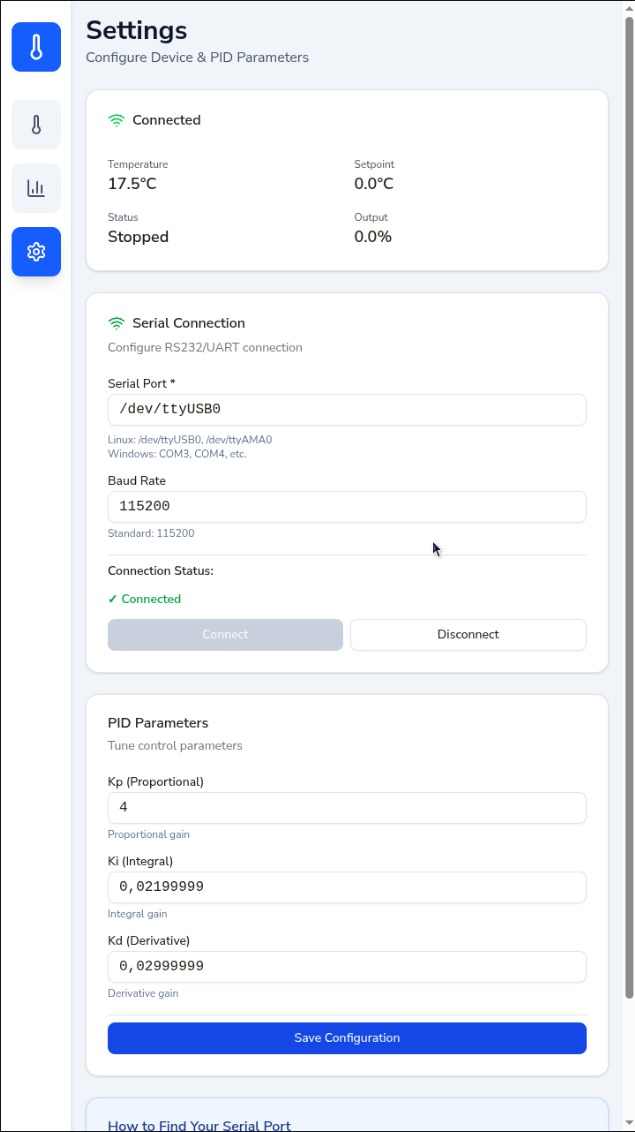
Compact smart thermal module for automated production testing of opto-electronic transceivers, using a TEC (Peltier) + copper block + liquid cooling loop approach for heating (~+90 °C) and cooling (~–10 °C). The system includes a local/remote GUI implemented on a Raspberry Pi 5 (localhost) with a touch HMI. The application allows setpoint definition, test profile execution and logging, and real-time monitoring.
Challenge
PICadvanced is a Portuguese technology company, specializing in the development of optoelectronic transceivers for fiber-to-home networks, standing out for high-data-rate transceivers such as 10 Gbps, 25 Gbps and recently 50 Gbps.
The development and manufacturing of these devices require compliance with specific benchmarks that ensure their correct operation, given their critical role in telecommunications networks. One of the main benchmarks for transceivers is stable and continuous operation at ambient temperatures ranging from 0 °C to 70 °C for commercial devices, and from negative temperatures up to 90 °C for purpose-made devices.
The most common method for ensuring this stability is based on recording the transceiver’s characteristic operating curve as a function of ambient temperature, followed by a calibration step. This is, however, an iterative and time-consuming process. The approaches currently in use rely on industrial thermal chambers available on the market which, despite their accuracy, have a high initial cost and are impractical for integration into fast and iterative testing methods, being more suitable for the final validation stages.
PICadvanced already owns a industrial thermal chamber for more complex tests, but there still remains the need for a more compact and pratical solution for quicker and simpler tests during the initial calibration phase.
In summary our project can be explained as follows: The construction of a compact thermal module, integrated with the heating/cooling system; An application for interacting with the system through a local GUI, and data collection.
Results
The following figure represents the Level 1 Block Diagram of the developed system that will be used to provide a clearer explanation of the work done:
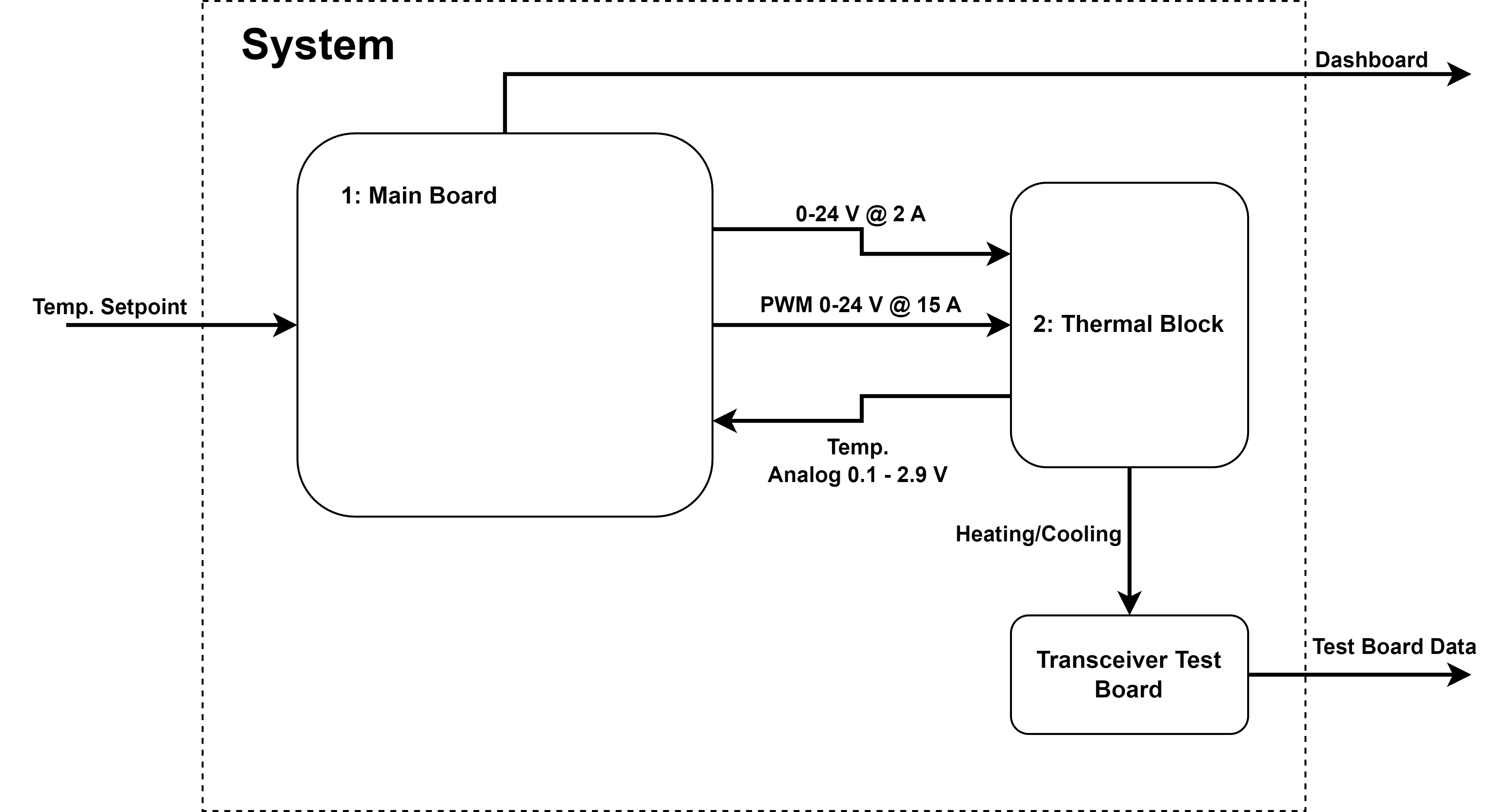
The system is composed of two main blocks, the Main Board and the Thermal Block, and an external block, the Transceiver Test Board, which represents the test board developed by PICadvanced for carrying out transceiver performance tests.
Main Board:
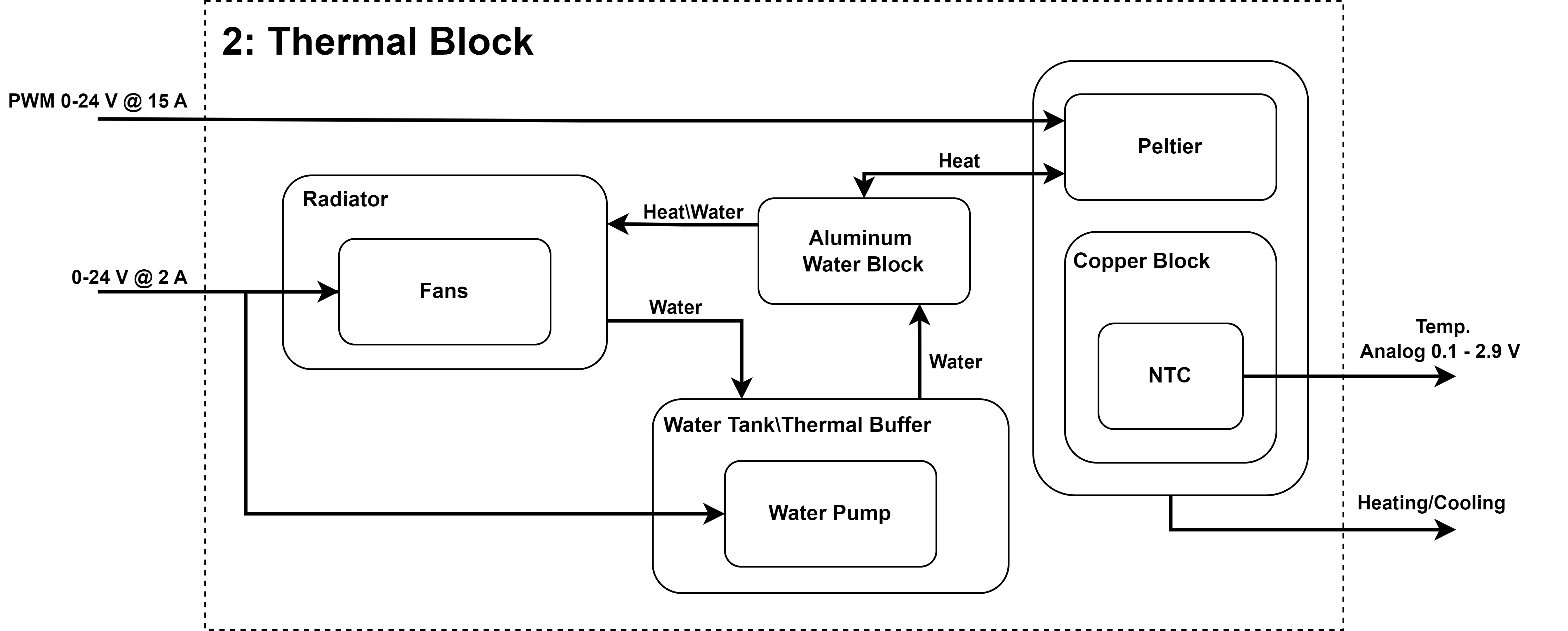
It consists of two blocks: the System Controller, which comprises a Raspberry Pi 5 and a touchscreen and is responsible for data processing, system state control, and user interaction; and the Temperature Controller, which acts as a power driver for the Thermal Block and integrates the PID controller of the heating/cooling system.
It includes a local HMI designed for direct operations such as setting setpoints, executing thermal profiles, and real-time monitoring. The GUI integrated into the local HMI can also be accessed via the local network.
Thermal Block
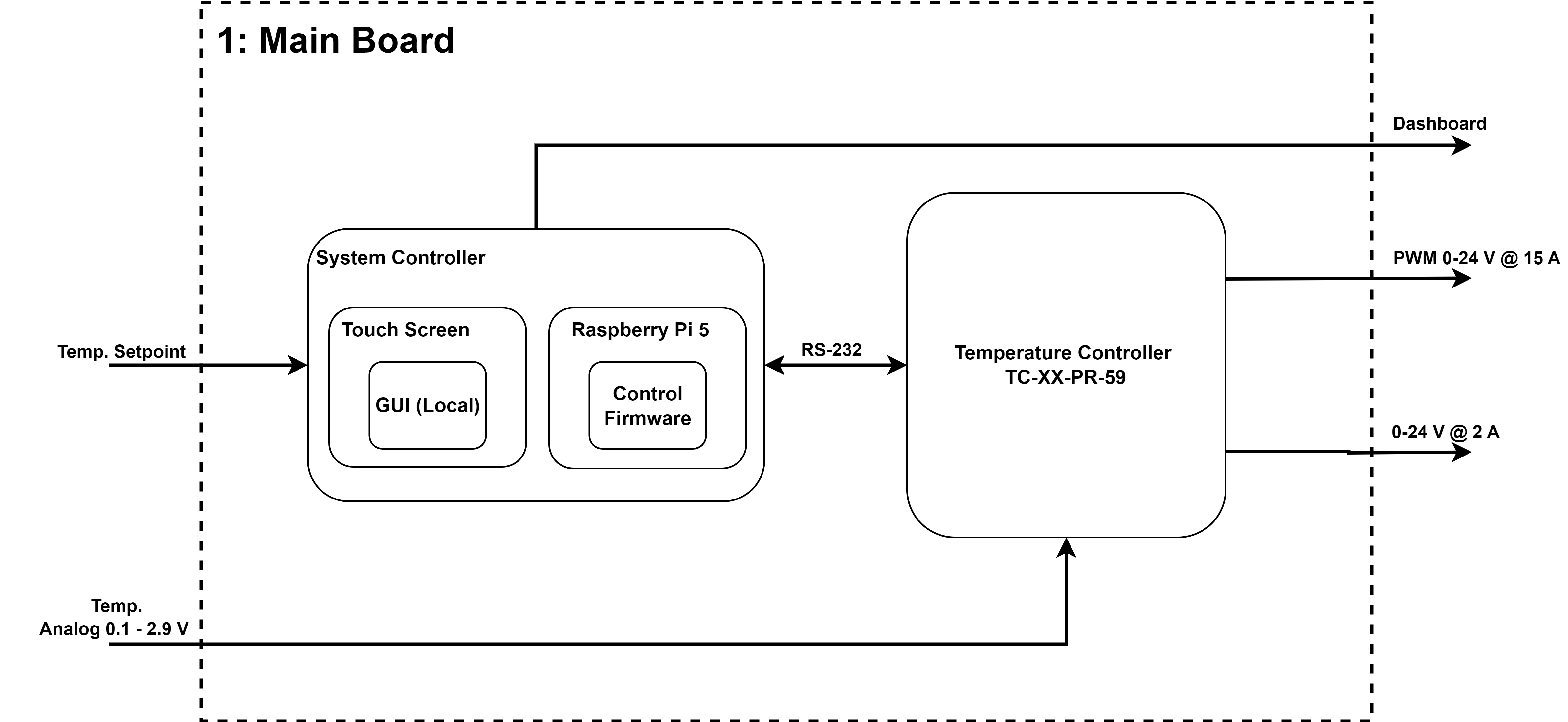
The Thermal Block is responsible for transferring heat/cooling to the transceiver under test, and a contact-based heat transfer approach was followed. It consists of a block and a closed-loop assembly.
The block includes a Peltier module and a machined copper block, which are responsible for generating thermal differentials and transferring heat to the transceiver, respectively. Copper was chosen for the machined block due to its high thermal conductivity. The copper block was designed with a metric threaded hole to accommodate an NTC sensor, allowing for more reliable measurement of the module temperature. This NTC sensor directly feeds temperature data to the Temperature Controller, which in turn drives the Peltier module accordingly.
When the system is operating in a cooling cycle, the Peltier module presents one face that cools down (facing the transceiver) while the opposite face heats up. This means that the Peltier is only capable of cooling the cold side down to a certain point before self-heating effects occur. To achieve the target temperature of −10 °C, a closed-loop assembly was added to cool the hot side of the Peltier during cooling cycles.
This mechanism consists of a closed-loop water-cooling system with an aluminum water block that extracts heat from the Peltier module. Through a continuous water flow, driven by a pump, the absorbed heat is transported to a water radiator equipped with fans, where it is dissipated. To ensure that water heating does not become a limiting factor, a water tank was included to act as a thermal inertia element for the system.
GUI